€5 off with code: OLIVIA

Our Brands

Alexander McQueen glasses

Alexander McQueen glasses: contrast as a design principle

Alexander McQueen eyewear, now marketed under the name McQueen, brings one of the brand’s fundamental characteristics – contrast – to the world of eyewear.

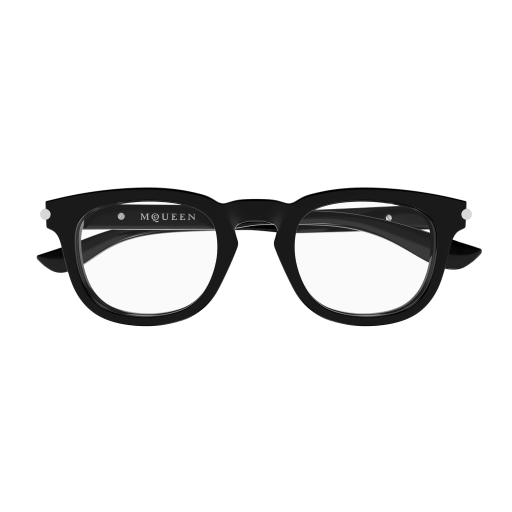
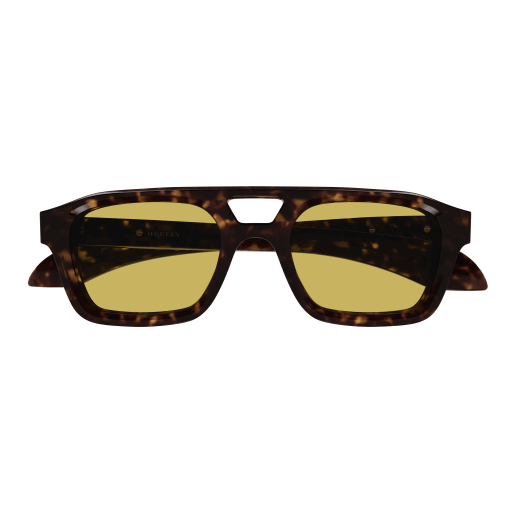
Alexander McQueen eyewear, now marketed under the name McQueen, brings one of the brand’s fundamental characteristics – contrast – to the world of eyewear. Founded in London in 1992 by Lee Alexander McQueen, the British brand was built on a vision that combines precise tailoring with a theatrical and experimental approach to fashion, where cut, proportions and silhouette take precedence over ornamentation. In the eyewear industry, this identity is not simply a matter of replicating the conventions of ready-to-wear fashion. Frames play on contrasting proportions, geometric shapes and metallic details: femininity and masculinity, fragility and strength, tradition and modernity all come together in a single pair. Among the most distinctive design features are the T-Bar, the McQueen logo laser-engraved on the temples, and interpretations of familiar shapes that are by turns classic and sculptural. Our selection captures this spirit across a deliberately limited range of styles, for both prescription glasses and sunglasses.

Our signature models

Also discover our signature models from the brand.

Alexander McQueen eyewear, now marketed under the name McQueen, brings one of the brand’s fundamental characteristics – contrast – to the world of eyewear. Founded in London in 1992 by Lee Alexander McQueen, the British brand was built on a vision that combines precise tailoring with a theatrical and experimental approach to fashion, where cut, proportions and silhouette take precedence over ornamentation.

In the eyewear industry, this identity is not simply a matter of replicating the conventions of ready-to-wear fashion. Frames play on contrasting proportions, geometric shapes and metallic details: femininity and masculinity, fragility and strength, tradition and modernity all come together in a single pair.

Among the most distinctive design features are the T-Bar, the McQueen logo laser-engraved on the temples, and interpretations of familiar shapes that are by turns classic and sculptural. Our selection captures this spirit across a deliberately limited range of styles, for both prescription glasses and sunglasses.

Alexander McQueen eyewear — collection at Olivia Balm

Who is Alexander McQueen?

Alexander McQueen founded his fashion house in London in 1992. His career path took him, notably, to Savile Row, a setting that proved pivotal in his training in British tailoring: he drew on its traditions whilst pushing them towards more radical proportions, cuts and silhouettes. This tension between technical mastery and creative freedom became one of the cornerstones of his work. Fashion shows play a major role in this identity, with presentations designed as visual and emotional experiences. In 2011, the ‘Savage Beauty’ exhibition dedicated to her work at the Metropolitan Museum of Art in New York confirmed the cultural significance of her work far beyond the world of fashion. Following the death of Lee Alexander McQueen in 2010, Sarah Burton, who had worked alongside him for many years, took over as creative director of the House. In 2024, the arrival of Seán McGirr marked the beginning of a new creative chapter. The McQueen identity is therefore not based on the reproduction of historic designs: it continues to evolve through new interpretations of the House’s silhouettes and design language.

T-Bar, Spike: what are the signature features of McQueen glasses?

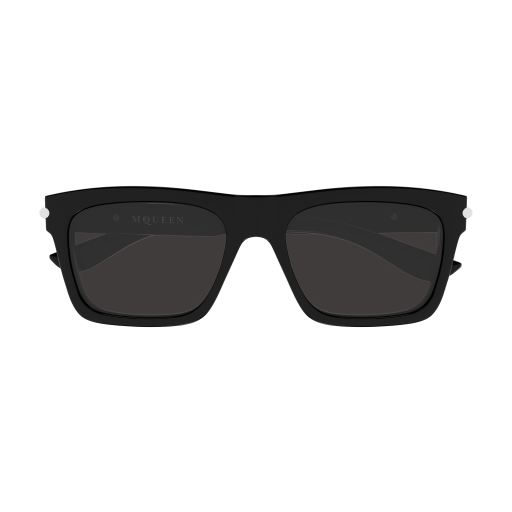
The T-Bar is the most recognisable feature of current collections. It appears in several forms: an oversized metal detail on the sides, rivets set into the temples, a bar integrated into the temple, or a graphic element that defines the entire frame. On a square frame, it often takes the form of rivets; on a cat-eye silhouette, that of an oversized bar visually connecting the frame and the temple; on the rectangular T-Bar City models, that of a highly visible metal T-bar. The same signature therefore produces very different results depending on the initial shape. It creates a break between the lens, the frame and the temple rather than serving as a mere ornament: McQueen eyewear often works by repositioning a familiar element rather than by seeking a completely new form. The Spike and Sleek ranges follow this approach. Kering Eyewear, which develops and distributes the House’s eyewear, presents them as two expressions of McQueen’s signature precision. Spike also features in the ready-to-wear collections, a sign that the frames form part of a season’s visual universe rather than functioning merely as accessories. Finally, the logo is usually laser-engraved onto the temples: the front remains legible, whilst the signature is featured on the side.

Acetate or metal: which to choose for a McQueen frame?

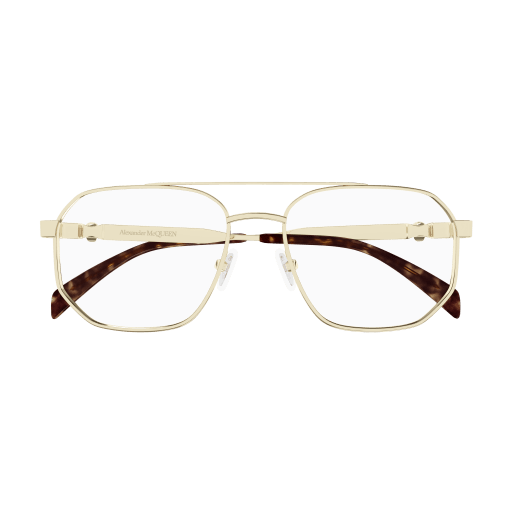
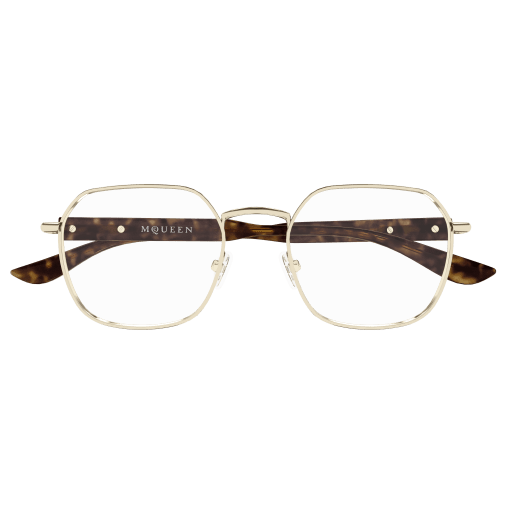
Acetate is ideal for more prominent foreheads and precise contours: it is predominant in square, cat-eye and some oval shapes. Some items use Eastman acetate incorporating a proportion of recycled materials obtained using a mass balance approach — this information applies to the models in question and does not apply to the entire collection. Metal, on the other hand, allows for slimmer frames and distinctly geometric shapes: narrow circles, structured temples, graphic details. It makes a pair appear lighter, but the edge of the lens remains visible with a strong prescription. Finally, the brand is exploring more enveloping designs, such as visor-style glasses made from injection-moulded material – a significantly more radical interpretation of its design language. The choice therefore depends less on the material itself than on the desired look: acetate frames make a bold statement, whilst metal frames create a sleeker look.

McQueen prescription glasses

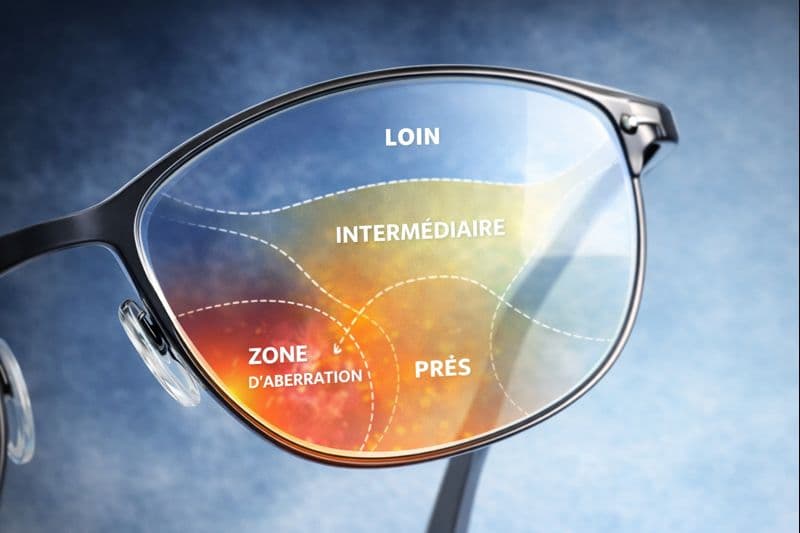
Eyewear is another area in which the brand expresses itself. The collections explore narrow oval frames in lightweight acetate, square shapes and geometric designs, with the logo positioned on the temple. A relatively classic silhouette becomes distinctive through its proportions and the treatment of the temple rather than its volume: the character comes from the line, not the surface. At Olivia Balm, the McQueen optical range is currently exclusively for men, and every model in the range can be fitted with corrective lenses. Before ordering, compare the frame width, lens height, temple length and bridge width with those of a pair you already wear: these measurements are listed on each product page. For varifocals, feasibility must be assessed with the frame in hand, based on the chosen shape and your prescription.

McQueen sunglasses

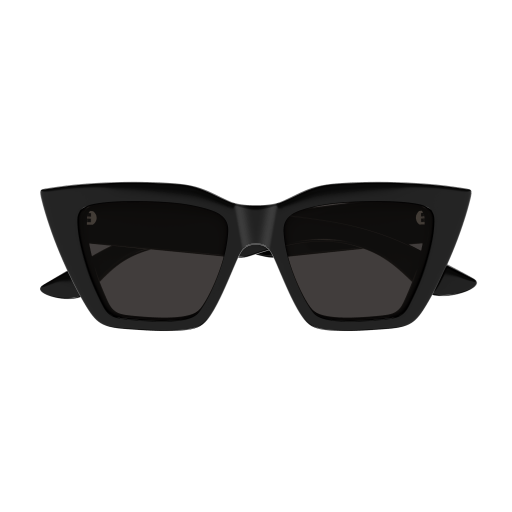
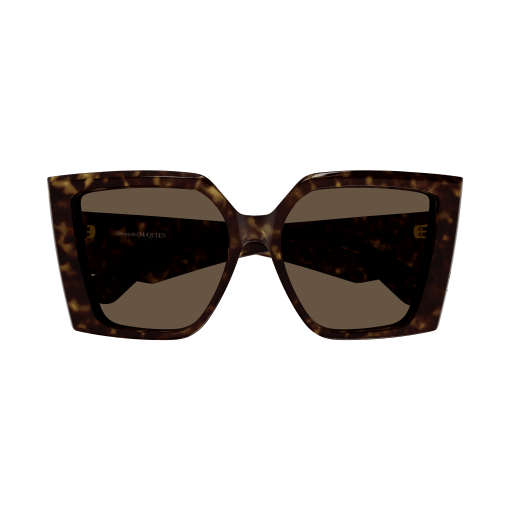
Sunglasses are the brand’s most extensive category: it features metal aviator frames, geometric silhouettes, square, rectangular, cat-eye and oval shapes, as well as T-bar models and visor-style designs. Some frames combine a classic shape with a highly visible T-Bar detail; others favour a sleeker design and a more discreet treatment of the logo. McQueen sunglasses are certified as 100% UV-protective against UVA and UVB rays, with tints varying by model — grey, brown, green or gradient. Several models can be fitted with corrective lenses, including T-Bar, square, oval and aviator styles, but compatibility must be checked on a model-by-model basis depending on your prescription. The sunglasses range also features the only women’s styles in our McQueen selection.

How to choose a pair of McQueen glasses?

The choice depends primarily on the shape and the desired level of prominence. Square and rectangular shapes create a structured look; cat-eye frames accentuate the upper part of the face; the narrower oval shape offers a more understated silhouette; an oversized T-bar draws attention to the sides of the face and the temples. The second criterion is proportion: an identical shape can produce a very different result depending on its width and height. A statement frame leaves no room for error in terms of size — if it is too wide, it overwhelms the face; if it is too narrow, it looks awkward. The size specified on the product description, compared with that of the frames you currently wear, remains the most reliable guide. Then there are the model-specific features: material, dimensions, lenses and, for sunglasses, filter category. Each item should be viewed individually, as collections and availability change from season to season.

Frequently asked questions about Alexander McQueen glasses

  • Q: What is the history of Alexander McQueen?

    A: The fashion house was founded in London in 1992 by Lee Alexander McQueen. Its identity stems from the designer’s training in British tailoring on Savile Row and his experimental approach to cut, proportions and silhouette. The ‘Savage Beauty’ exhibition at the Metropolitan Museum of Art in New York in 2011 confirmed the cultural significance of his work beyond the realm of fashion.

  • Q: Who is currently in charge of Alexander McQueen?

    A: Seán McGirr joined the House in 2024 as creative director, following the period under the leadership of Sarah Burton, who had worked alongside Lee Alexander McQueen for many years. The eyewear collections reflect these creative developments: they reinterpret the House’s design language rather than simply reissuing its historic designs.

  • Q: What is the McQueen T-Bar?

    A: The T-Bar is a design feature found on several McQueen glasses. Depending on the model, it takes the form of an oversized metal bar on the sides, a detail integrated into the temple, or metal rivets. On the rectangular T-Bar City models, it becomes the most prominent feature of the frame.

  • Q: What is the Spike collection?

    A: Spike is one of the ranges promoted by Kering Eyewear, alongside Sleek, as an expression of McQueen’s characteristic precision. It also features in the House’s ready-to-wear collections, illustrating the link between eyewear and the visual aesthetic of a particular season.

  • Q: How much do Alexander McQueen glasses cost?

    A: Expect to pay between €249 and €269 for prescription frames and between €239 and €319 for sunglasses, for the frame alone. For a pair of prescription glasses, the lenses are charged separately: their price depends on your prescription and the treatments you choose.

  • Q: Are there any McQueen glasses for women?

    A: Yes, two pairs of sunglasses: the square AM0467S and the cat-eye AM0507S, both priced at €239 in acetate. The prescription glasses range, however, is currently exclusively for men — of our seven McQueen models, five are listed as men’s styles.

  • Q: Which size of McQueen frame should you choose?

    A: Our frame sizes range from 48 to 57 mm, a significant range for a selection of seven models. The AM0498O in 48 mm suits a slim face, whilst the AM0459O in 57 mm requires a certain width of face. The most reliable guide is the pair you already wear: the frame width is the first of three numbers inscribed on the inside of the temple.

  • Q: Are McQueen prescription frames suitable for varifocals?

    A: Our three optical models can be fitted with corrective lenses, and their lens height is sufficient in most cases. The main consideration is the width, and the metal frames of the AM0499O and AM0459O models reveal the edge of the lens: for a strong prescription, the acetate frame of the AM0498O will be more flattering. Please send us your prescription along with your chosen model; we will check the lens positioning before placing your order.

Models available as products

Go further

Guides to choose well

All our guides

100% secure payment

Encrypted transactions, reinforced protection.

Tiers payant on request

Every prescription order comes with a health-insurance claim form.

Free delivery from €50

Careful packaging, premium tracking included.

Certified & guaranteed

Frames and lenses authenticated in store.

Satisfied or refunded

14 days to change your mind.